Since 1972 · Product of Phuket
The Story of Methee Phuket
The Story of Methee Phuket
Chapter I
Two Goldsmiths
Before 1972
The story of Methee Phuket begins before 1972, with two people: Grandpa Methee and Grandma Boonma.
Before they ever made cashews, both of them were goldsmiths.
They had no background in farming, had never run a food business, and surely never imagined that one day their lives would be bound to what Phuket people call “kahyee”: the cashew nut.
Chapter II
What Filled Every Home Became What the Whole World Wanted
Phuket, long ago
Phuket in those days was very different from today.
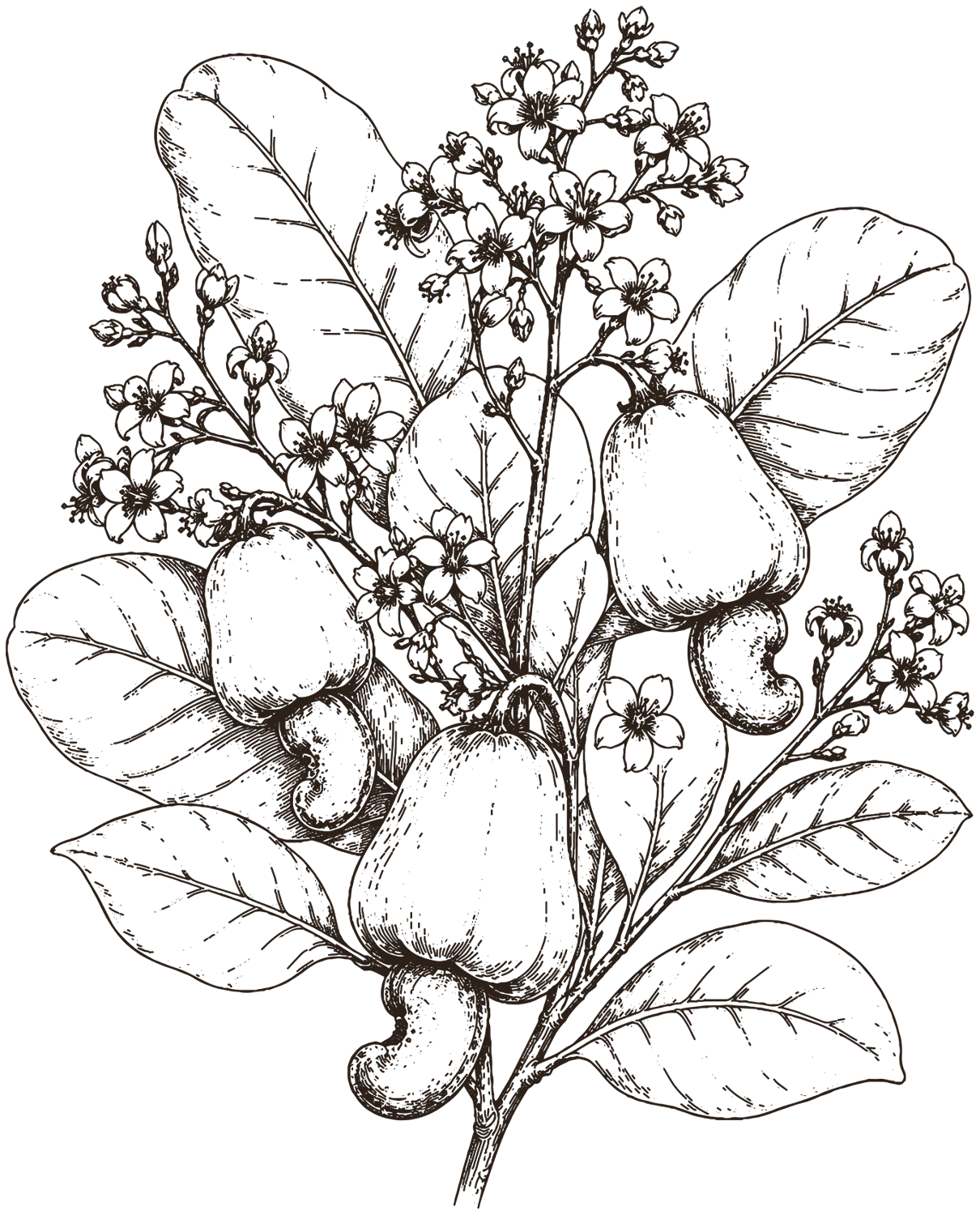
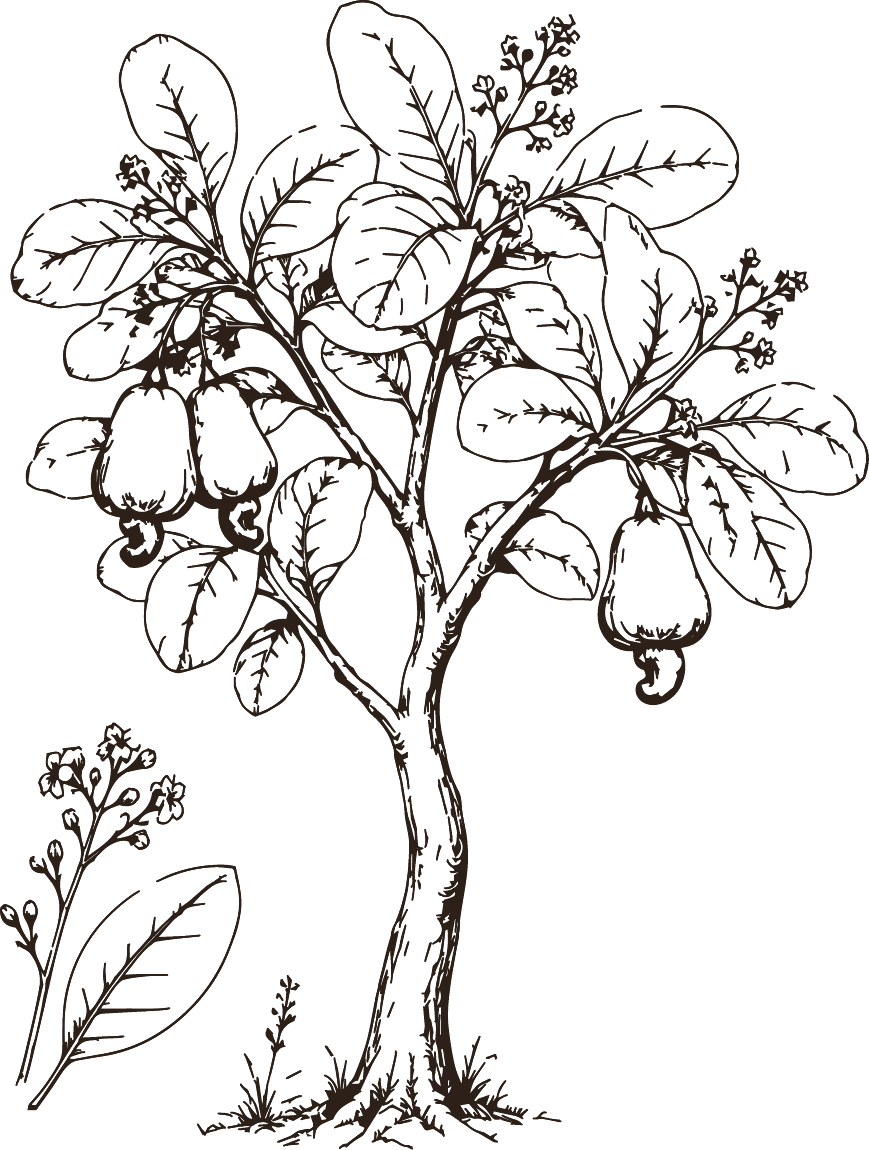
Cashew trees grew all around Phuket homes, especially out the back. A kahyee tree fruits only once a year, in the dry season, but when the season comes every tree bears at once, in great abundance.
There was so much of it that no one thought of it as anything precious.
And not only in Phuket. All across the South, on Koh Yao and in the seaside communities, cashew trees grew in great numbers.
Then one morning, sipping his kopi and reading the newspaper as he did every day, Grandpa came across a small article about cashew nuts.
The Morning Paper
A Little Nut the Whole World Wants
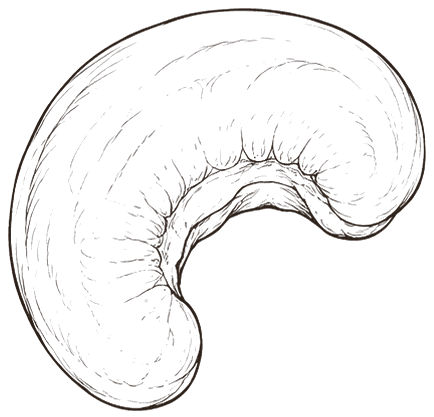
The very thing Phuket people saw every day was a valuable product, wanted in countries all over the world.
Grandpa was thrilled by what he read.
Because what people on the other side of the world wanted
was growing all around us.
From that one newspaper, a small idea took root:
What if we took what we already have at home, and made it worth something more?
Chapter III
30,000 Baht and 4,000 Kilograms
Soi Romanee, Phuket Old Town
The problem was, Grandpa and Grandma had no idea where to begin.
They were goldsmiths, not farmers, and had never made cashews into a business.
฿30,000
All the savings they had at the time
They decided to start the business with that money, renting a small space in what old Phuket called “Trok Hang Ah Lai” or “Ang Ah Lai”, the lane that later became Soi Romanee in Phuket Old Town, linking Thalang Road and Dibuk Road.
In the tin-mining boom years, the lane had been Phuket’s famous quarter of entertainment houses and red lanterns. As times changed it slowly fell quiet and run-down. Few people lived there, so the rent was not as high as elsewhere.
And so it became a small place where two people without much capital could begin.
With the lease signed, Grandpa did something that gave Grandma barely a moment to catch her breath.
He ordered 40 sacks of kahyee.
Each sack weighed about 100 kilograms.
Suddenly there were 4,000 kilograms of cashews in front of two people who had never done this before.
Grandma hardly had a chance to decide whether to start or not, because Grandpa had already placed the order.
Most importantly!!! 4,000 kg of kahyee, already bought, and no returns!!! Grandma got a pounding headache.
Two goldsmiths who knew next to nothing about kahyee had to start learning in earnest, that very day.
How do you roast them so they all cook evenly?
How do you get the hard shell off without breaking the nut inside?
How do you store them so they don’t spoil?
And most important of all…
What do you do with 4,000 kilograms of kahyee piled up in front of you?
That is where Methee’s experiments truly began.
Chapter IV
From “Roast and Pound” to Trial and Error
The old village way
In the old days, the villagers’ way with kahyee was quite simple. The traditional method was called “khua lae toi”: roast and pound.
Whole nuts, still in their shells, were roasted over the fire until they burst into flame and smoke, then cracked or pounded open to get at the kernel inside.
People used whatever vessel came to hand: an old wok, a pot, a scrap of iron, even a tin can nobody needed any more. After roasting kahyee, a pan turns pitch black from the oil in the shells and the soot of the fire.
Roasting like this takes a great deal of experience.
Too fierce a fire, and the nuts burn.
Too gentle, and they don’t cook.
Some cooked, some raw.
The aroma and the taste never quite even.
A skilled roaster could tell whether the nuts had reached just the right point simply by listening to them as they roast.
And once they had, the heat had to be stopped as fast as possible. The old folk had their own wisdom for it: sand, a damp cloth or fresh leaves laid over the nuts, to draw off the heat before they could cook on and burn.
This was the knowledge Grandpa and Grandma held in their hands at the start.
But at this kind of volume, the old way had many limits. So they began to experiment.
They tried
Method after method.
Sometimes the nuts burned.
Sometimes they broke.
Sometimes the taste just wasn’t right.
There was waste, there were losses, and there were stretches when the work brought almost no profit at all.
The trial and error didn’t happen just a few times, and it didn’t end in a few months. It went on so long that there were moments when both of them nearly gave up.
Chapter V
Until One Day, a Goldsmith’s Skill Became the Answer
The cracking machine
One of the biggest problems in making kahyee is cracking the shell.
The shell is hard and curved, and inside it holds an oil that irritates the skin. Handle it carelessly and it can blister your hands.
Press too hard, and the nut inside breaks.
Too gently, and the shell won’t open.
Grandpa, a goldsmith by trade, began turning his craftsman’s skill to the problem.
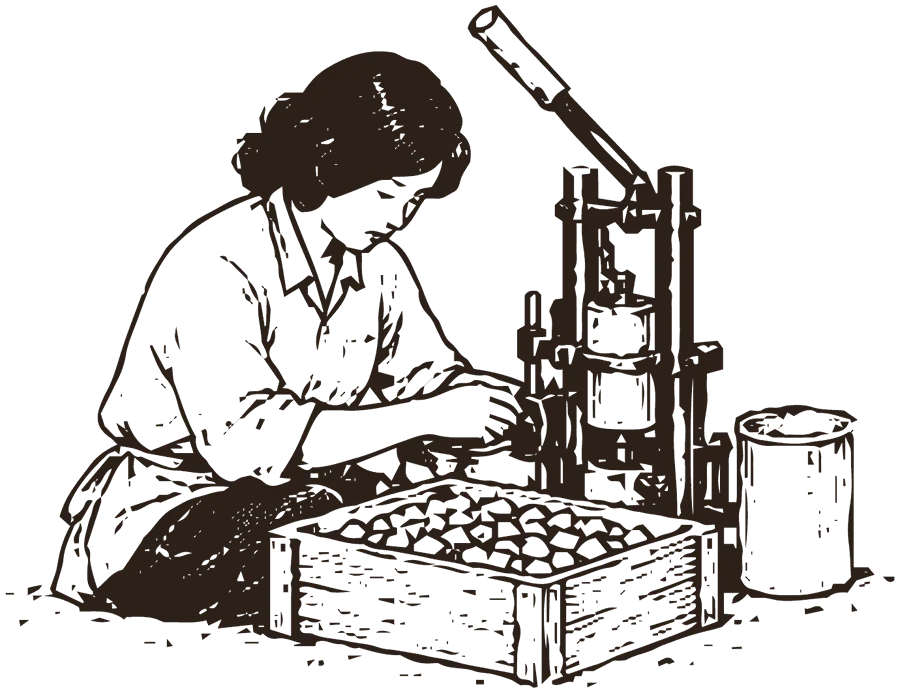
He set about inventing a cashew-cracking machine.
Its mechanism used a blade with a curved hollow shaped to fit the curve of the shell, while another part held the nut in place, so the shell could be opened with far less damage to the kernel inside.
The idea became one of Methee’s great turning points.
- Production became faster.
- More nuts could be cracked.
- And most importantly, fewer nuts broke.
What’s remarkable is that the person who solved the cashew’s problem that day was not a farmer, nor a food scientist,
but a goldsmith, trying to understand kahyee one nut at a time.
Chapter VI
Knowledge No Textbook Could Teach
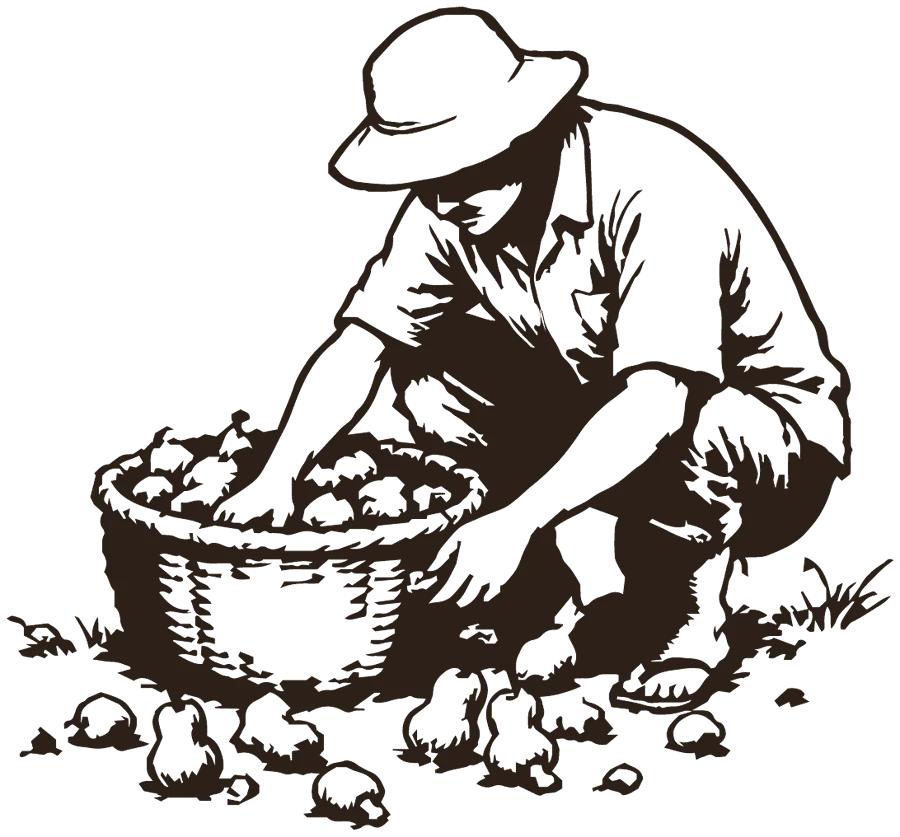
From the source
Living with kahyee year after year, Grandpa and Grandma slowly learned that a cashew’s flavour does not begin at the roasting pan.
It begins at the source.
Where the tree grows, the soil, the water, the weather, the harvest, the drying, right through to how the nuts are kept: every one of them shapes the quality of the nut.
They learned that kahyee from certain places, especially near the sea, on sandy ground or where the water runs brackish, gives a nut of fine character and taste.
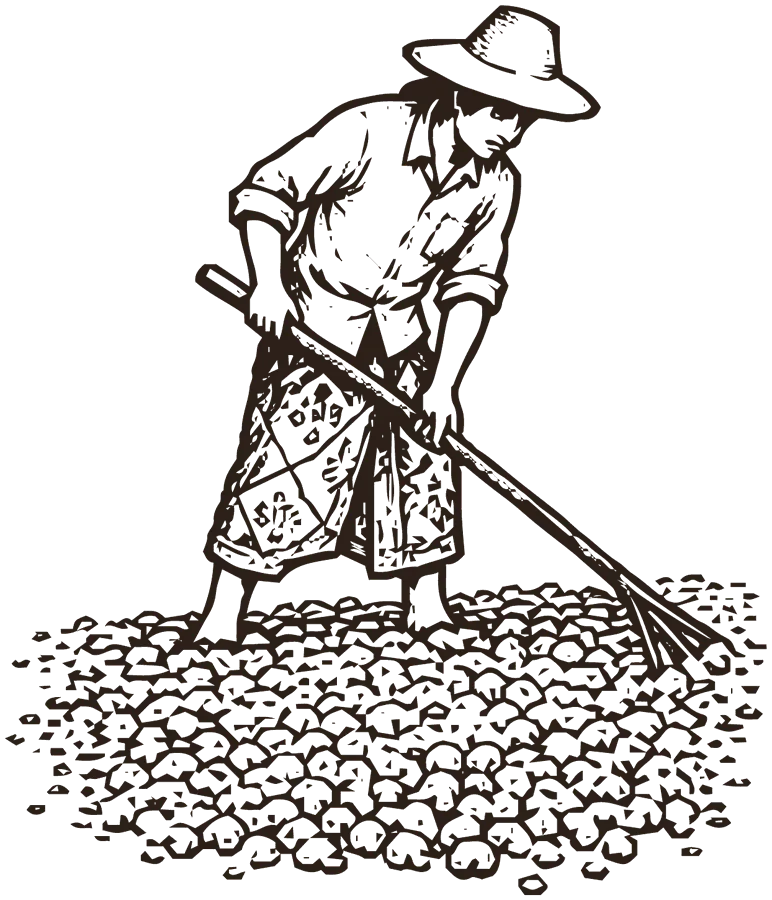
After the harvest the nuts must be dried just right. If they aren’t dried properly and moisture lingers, the quality, the aroma and the nut’s natural sweetness all change.
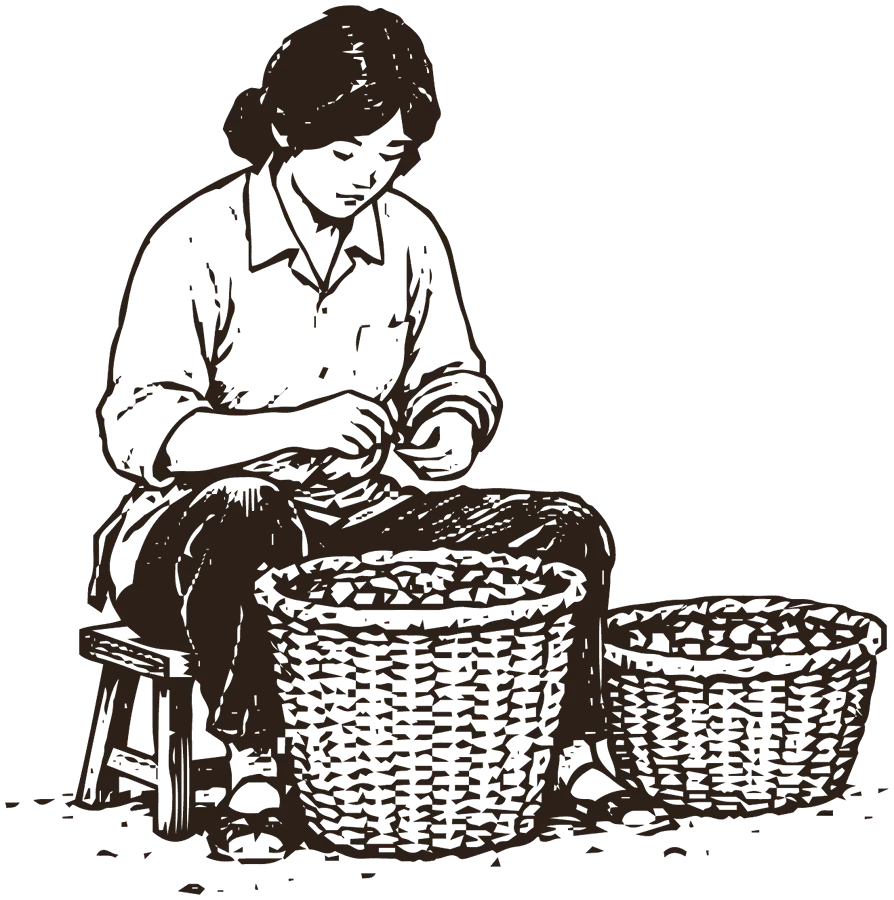
Then come cracking, peeling, sorting, roasting and storing. Every step reaches all the way to the final nut you put in your mouth.
From the source
Every step, all the way to the nut
I
The source
Where the tree grows: its soil, its water, its weather.
II
Harvest
Gathered once a year, when the dry season comes.
III
Sun-drying
Dried just right, so moisture can’t steal the sweetness.
IV
Cracking
Each shell opened on the goldsmith’s cracker.
V
Peeling
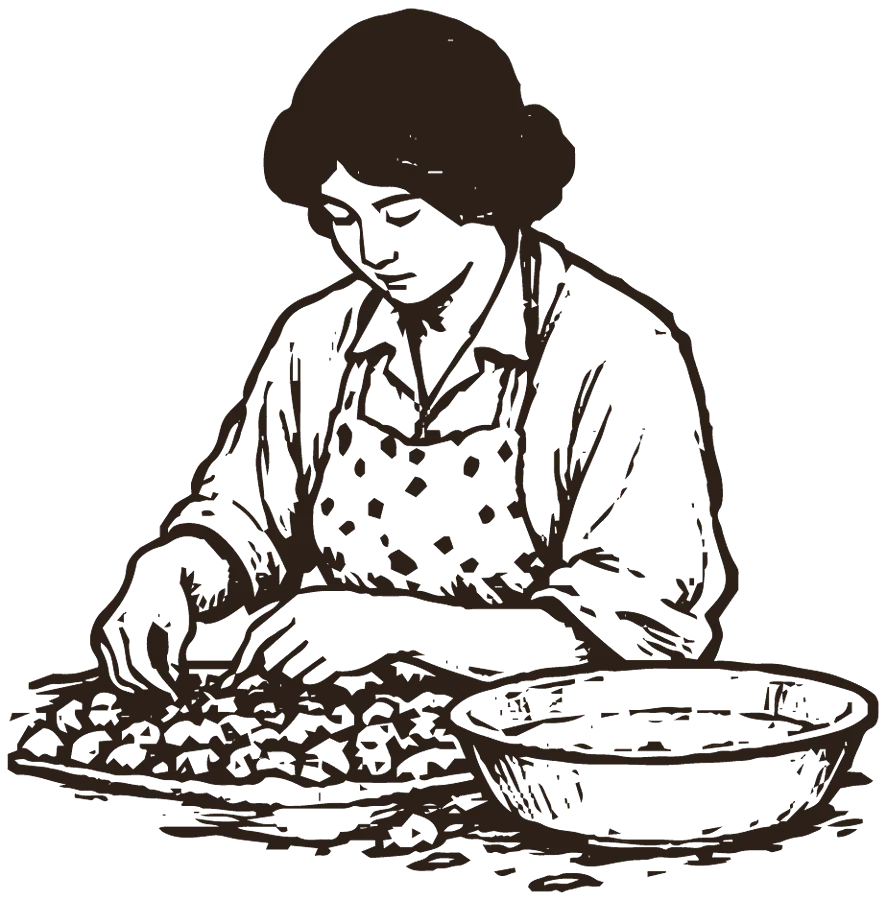
The thin skin eased away by hand.
VI
Sorting
Every nut looked over, one by one.
VII
Roasting
Brought to the point where the aroma is just right.
VIII
Storing
Kept with care, so every nut stays sweet.
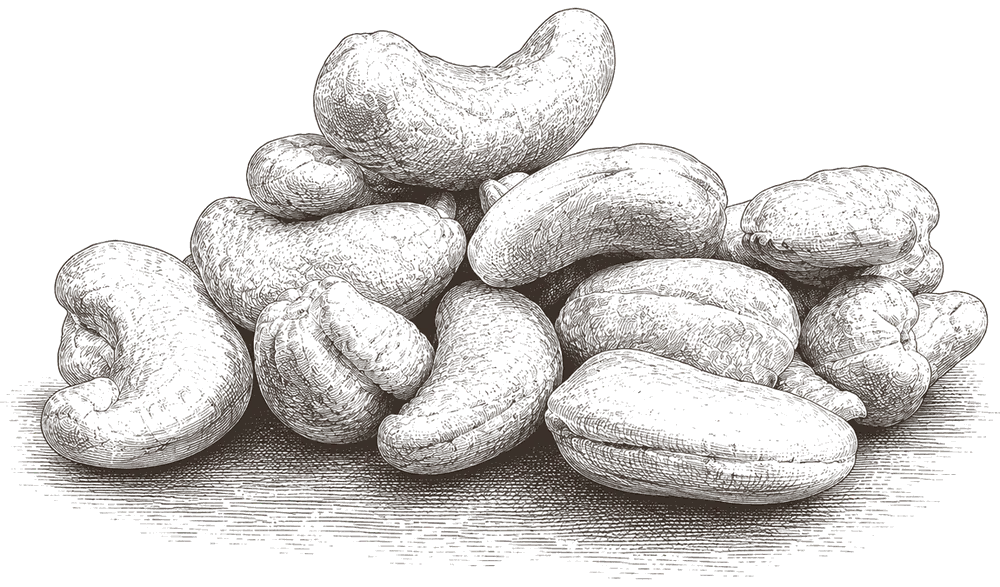
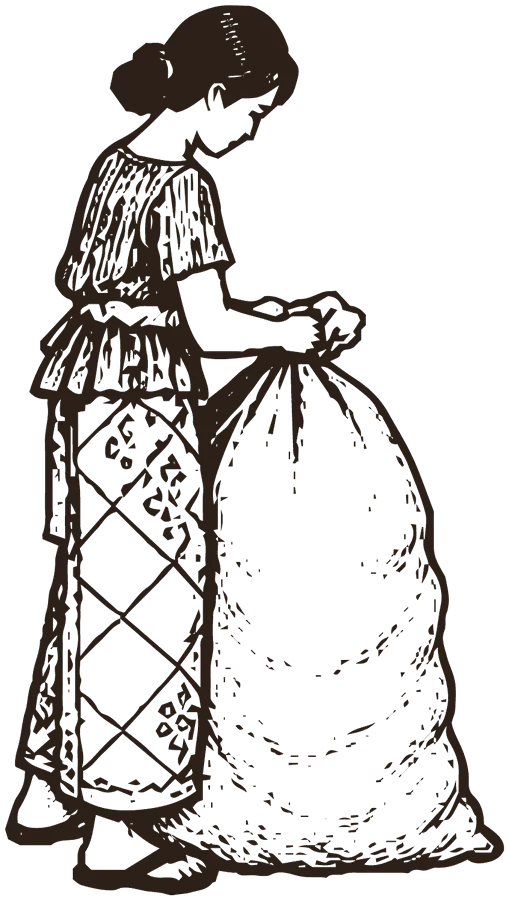
No one handed them this knowledge on the first day.
It came from repeating, tasting, watching, getting it wrong and putting it right, for decades,
until it became a simple understanding, handed down through the family:
A good nut is sweet as it rests on your tongue, and fragrant as you chew.
Because real flavour doesn’t start with seasoning, or anything added at the end.
It starts with the quality of the nut, right from the source.
Chapter VII
From Plain Kahyee to Phuket’s First Flavoured Cashews
The next question
Once Grandpa and Grandma could make good cashews, they didn’t stop at making kahyee the way it had always been made.
The next question was:
How can we make kahyee more than it has ever been?
In those days, most of the kahyee Phuket knew was simply roasted or prepared the folk way, eaten for the natural taste of the nut.
But Grandpa and Grandma began to try something new. They seasoned kahyee and developed it into all kinds of flavours,
until Methee became the first in Phuket to turn cashew nuts into flavoured cashews.
From the plain kahyee that once filled the back of every Phuket home, this little nut gained flavour, variety, and a value it had never had before.
No longer just something picked from the tree and roasted to eat, it could become a product of Phuket: a gift that lets people carry the taste of Phuket home.
From those very first flavour experiments, it slowly branched out into flavour after flavour, and became one of the things people remember Methee for to this day.
Chapter VIII
As the Factory Grew, the Community Grew With It
Many hands
As Methee grew, it wasn’t only the number of nuts that grew.
At one point, more than 300 people were part of the work, from the source all the way to the factory.
In an era when Phuket didn’t yet have hotels, a tourism industry, or the many jobs it has today, work with kahyee became an income for a great many people in the community.
Some took nuts home to work on. Some sat peeling skins, some helped sort. When they were done, they brought the nuts back to the factory and were paid by weight.
A mother who had to stay home with her children, or someone without a steady job, could take work home and earn an income of their own.
For older generations in Phuket, the picture of families sitting at home working kahyee, then carrying the nuts back to the factory by the kilo, is one many still remember.
From a business started by just two people, kahyee built more than a factory.
For a time, it was part of the life and livelihood of the Phuket community.
Chapter IX
Not Just a Product, but Part of Phuket’s Food
Peranakan Phuket
When we talk about Phuket food, we think of Hokkien noodles, dim sum and many other dishes rooted in Hokkien Chinese culture, slowly blended with local ingredients, people and flavours.
Phuket is a city where people of many origins and cultures came to make their home: Hokkien Chinese, Malay and the island’s own. Their blending became part of Phuket’s Peranakan culture.
Everyday food and the food of important days are not the same.
At Chinese New Year, at weddings, when honouring the ancestors or at other auspicious ceremonies, food isn’t chosen for taste alone. Many dishes are made because they carry meaning.
One of them is kahyee kaew: cashews glazed in sugar.
The nuts are coated in sugar until sweet and crisp, fragrant with sesame, and best enjoyed with Chinese tea.
In the old days sugar was precious, so sweetness meant a great deal on auspicious days, above all at weddings.
Sweets were like a blessing for the couple: a life together that is sweet, harmonious and happy.
So kahyee didn’t only become a “Phuket souvenir” on the day tourists began to arrive.
It was in the kitchen, at every celebration, in our memories, and in the way of life of Phuket people long before that.
Chapter X
From a Single Cashew Tree, Almost Every Part Has Value
The whole tree
As Grandpa and Grandma lived alongside the kahyee tree and came to know it better, they saw value in far more than the nut.
- 1Young shoots & leavesEaten with local dishes
- 2The kahyee fruitCooked into food and made into drinks
- 3The nutRoasted, seasoned, made into sweets and so much more
So Methee slowly experimented, putting everything the tree gives to the best possible use.
One product carried on to this day is cashew apple juice, or nam kahyee, made from the part of the fruit many people never even knew you could drink.
It reflects the very same way of thinking Grandpa and Grandma had from the very first day:
What is close to us, if we understand it well enough, may be worth more than we ever saw.
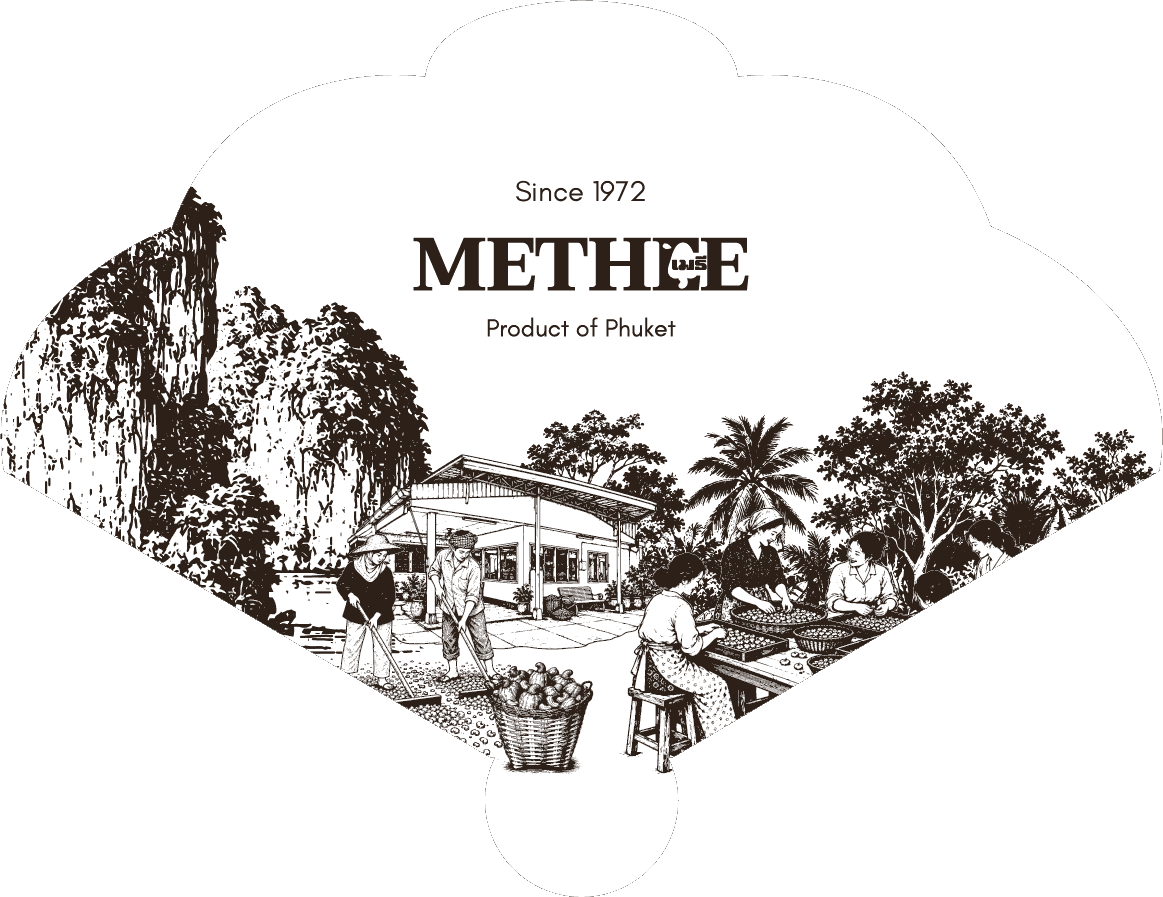
Since 1972 · Product of Phuket
Taste the Story
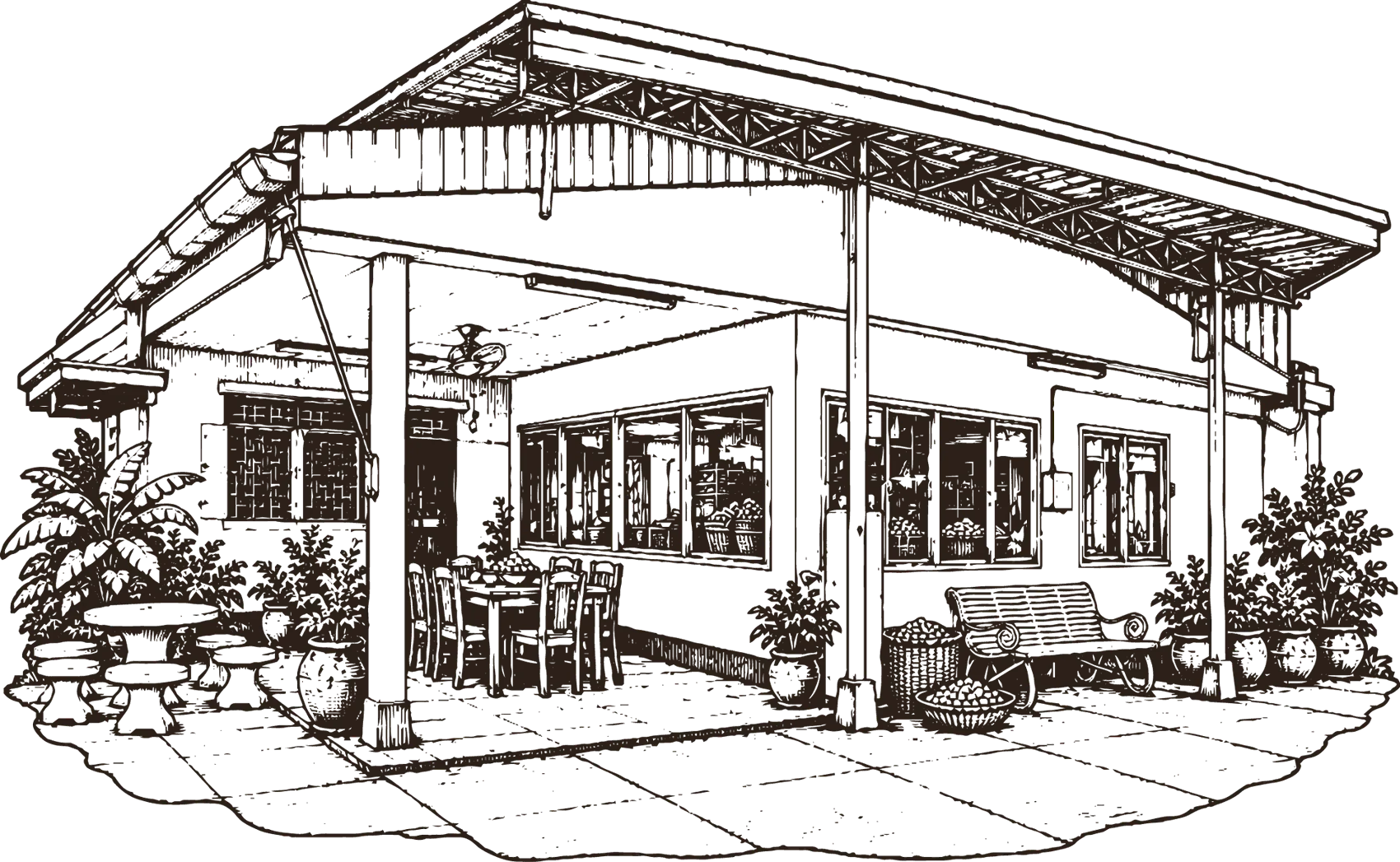
Visit our shop in Phuket Old Town, roast and crack kahyee the traditional way on our tour, or carry a taste of Phuket home.